

Subject to the forces of nature, a planned journey is rarely undertaken in a straight line and requires constant adjustment to compensate for the prevailing conditions. In navigating a route, “dead reckoning is the process of calculating one’s current position by using a previously determined position, or fix, and advancing that position based upon known or estimated speeds over elapsed time and course.” Wikipedia
Investment markets experience similar volatility: sometimes they’re up, sometimes they’re down and, on occasion, their rise and fall can be severe, just like now, where global markets are fluctuating amidst the COVID-19 pandemic and the economic devastation it leaves in its wake.
The recent drastic bout of market volatility has seen markets plunge on a scale last seen in 1987 and to levels last seen in the market crash of 2007/8, decimating investment portfolio values and spawning fear in young and old investors alike.
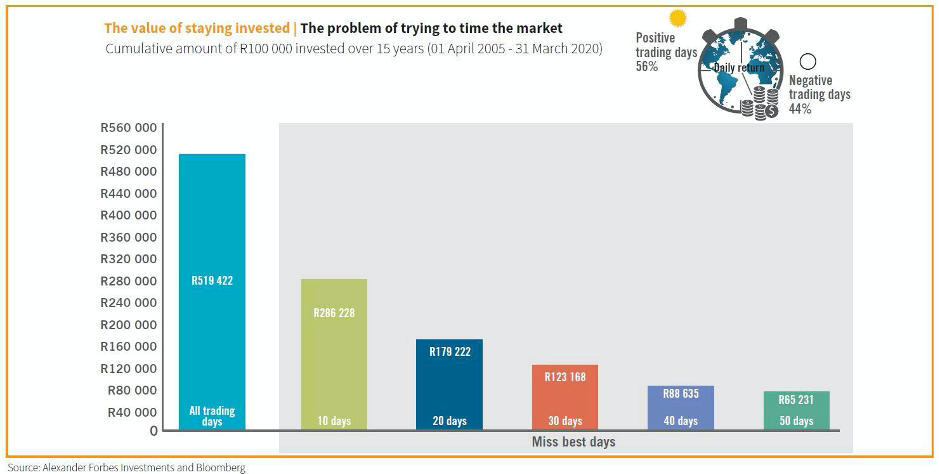
The markets can be a scary place at times, but panic does not pave the way to wealth. As the graph shows the gains experienced over the longer term far outweigh the losses experienced in the short term. The historical evidence reminds us that the biggest price swings are rare occurrences that should not exaggerate the risk and uncertainty pinned on the anticipated long-term value of an investment.
Decisions made based on fear may be ones you regret later. Before you make any changes, hold your course!
Doing nothing is an acceptable strategy. If you’re worried that you might not be able to retire on a particular day, understand that you don’t have to make that decision now, while there’s so much uncertainty. Staying invested not only ensures that you avoid the realisation of losses but also takes the guesswork out of the upside. There is in fact a danger that one misses out!
Each individual’s investment goals are unique and are set with the future in mind. Taking emotions out of decisions during times of stress, especially when income levels come under pressure, is easier said than done, however.
You can’t control the markets, but you can take control of your personal situation! If not already, review your budget, determine what expenditure matters most, and where necessary take advantage of concessions made available by your choice of financial institution.
Extend your horizon. Focus on your financial and life goals: avoid the frenzy in the headlines and the media.
Don’t be afraid to seek advice; that’s what an adviser is there for. Speak to your financial planner in order to assess how far off course the storm has taken you, if at all, and about opportunities you may be able to take advantage of.
External, unbiased and professional advice is an extremely valuable commodity and a research paper published recently by Vanguard validates that hypothesis. The research shows that the components of an advisor’s value are organised around trust, personal connection and proactive outreach from a personal perspective, as well as the functional attributes — constant plan monitoring, expert perspective and visibility of portfolio changes.
Most importantly an experienced advisor takes the emotion out of the investment decisions and ensures investors stick to their long term financial plans.